
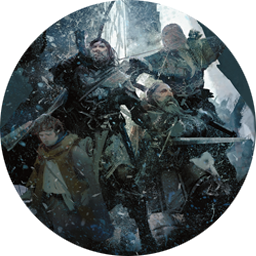


Combat
Every age of the world has seen conflict and strife. With the influence of the Shadow extending again over the land, the choices to confront it without taking up arms grow shorter every day.
That’s why combat is a frequent occurrence in the life of an adventurer. Frequent, but not less tragic — The lives of all members of a Company are at stake, and they can consider themselves fortunate if they see the end of even a victorious fight without suffering from the consequences of the blows they received.
On average, a Company will experience at least one combat encounter in one out of every two sessions of play. Whenever combat occurs, the normal flow of play is interrupted so that the players and the Loremaster can collaborate to create a tense description of how the heroes and their foes confront each other.
the onset of battle
Combat is a dramatic and momentous event for any group of players that should not have its significance dulled by bland repetition. In the books, the episodes featuring fights and battles vary wildly in presentation, set as they are in diverse locations and born out of differing narrative needs.
Before combat even begins, the Loremaster should make sure that not all battles unfold in the same way, basing the circumstances on the ongoing story and paying particular attention to the plans and preparations of the players and their strategic options.
Is the Company fleeing from a greater threat and needs to open a way through their enemies’ ranks? Are they fighting to protect a place — or a person? Are they following a dangerous mountain path, or were they encamped among thick trees? Is it raining, or is the battlefield rough and snow-covered?
Whenever possible, the descriptive details employed by the Loremaster should have repercussions on how combat will be resolved; for example, influencing how many opening volleys to allow, if any, or whether any combatants should be made unavailable as eligible targets for engagement (see below).
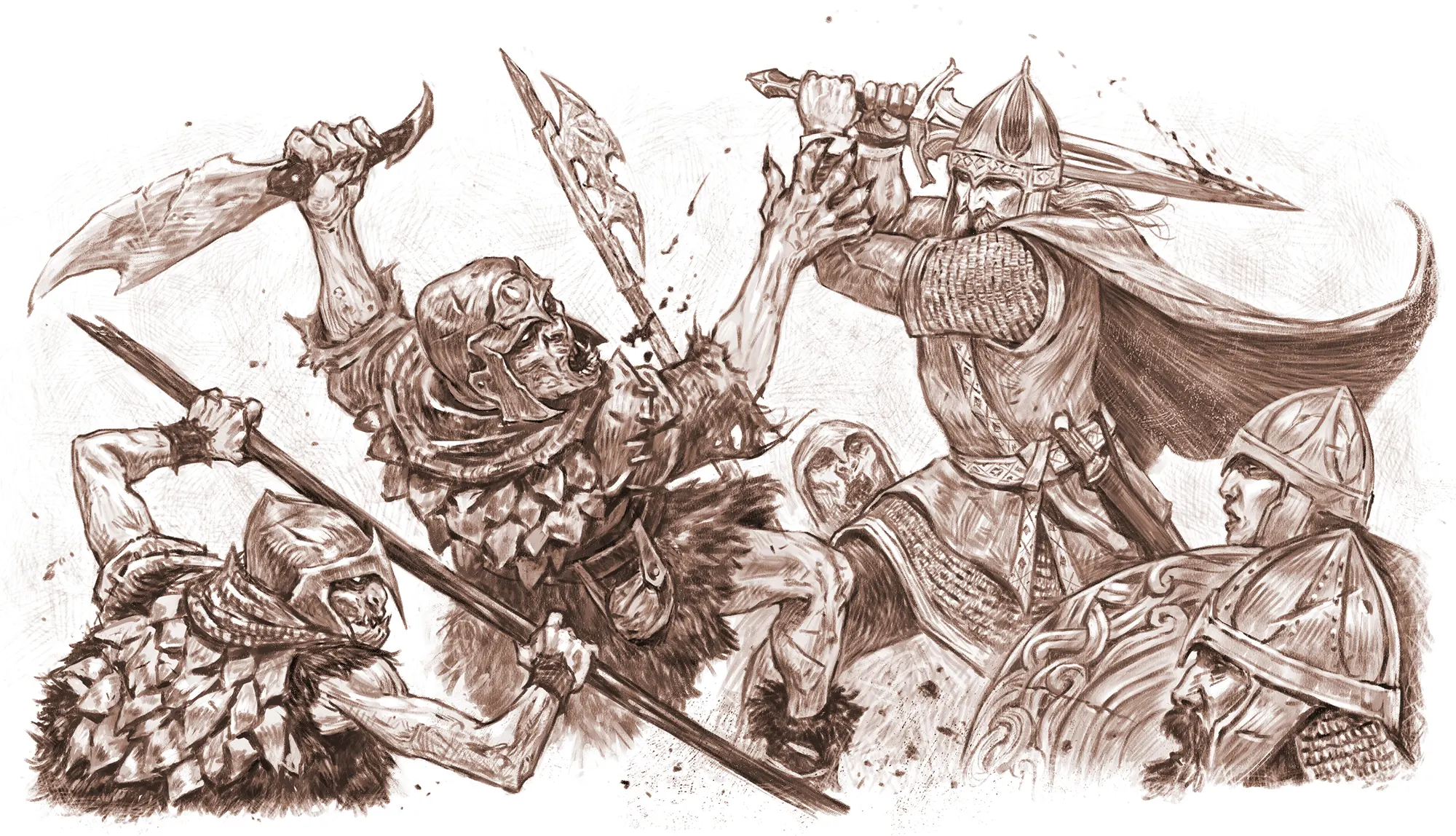
combat sequence
Once a combat encounter is initiated, the following steps must be applied in order to keep the action flowing:
- Opening Volleys
- Close Quarters Rounds
Opening Volleys
At the start of a battle, the sides involved in the confrontation are still separated by a distance, potentially allowing for a brief exchange of volleys using ranged weapons before combat at close quarters is initiated.
The Loremaster must now determine how many volleys to allow, if any at all, based on the circumstances of the fight as defined during the Onset.
- Under most circumstances, all combatants are entitled to at least one volley using a bow or a thrown weapon (a spear or a short spear).
- If the two sides are separated by a greater distance, then the Loremaster might allow combatants using a bow to let loose two volleys, or even more.
All volley attacks are resolved as normal ranged attacks (see below). Player-heroes carrying a shield double its Parry modifier if aware of the incoming attack (a hero advancing to join a confrontation definitely would be).
Normally, the volley exchange is resolved with the Player-heroes launching their volleys first, unless the Loremaster considers the circumstances to favour the opposition.
When the opening volleys are completed, the combatants cover the distance that separates them and begin fighting at close quarters.
Close Quarters Rounds
Once fighting at close quarters is initiated, the gameplay is broken down into a cycle of rounds, played one after the other until the end of the battle.
The sequence of each Close Quarters Round is explained in detail below.
Surprise Attacks
A surprise attack happens when the Company is ambushed by a foe, or when the Company succeeds in springing a trap upon unsuspecting enemies (if all sides involved in combat are aware of the presence of enemies, skip this phase).
In all cases, the Loremaster must consider the circumstances and decide whether a test is required to resolve the situation or not — for example, a well-planned ambush made against an enemy without lookouts or individuals on watch allows the opposition to attack automatically with the benefit of complete surprise.
If the Loremaster considers that a roll is required, then the following guidelines must be applied.
The Company is Ambushed: When enemies are trying to take the Company by surprise, all Player-heroes in the Company must make a roll of AWARENESS.
Player-heroes who fail their roll have been caught off-guard — they won’t be able to make an opening volley roll nor to take actions in the first Close Quarters Round.
Ambushing Enemies: If the Company is trying to waylay their enemies, they must make a STEALTH roll. All players participating in an ambush must succeed in their roll for the surprise attack to succeed.
If the ambush attempt is successful, the surprised enemies won’t be able to make opening volleys and lose (1d) on all combat rolls in the first Close Quarters Round.